 January 08, 2026


Key takeaways
Causes

Trauma: Direct blows to the face from falls, sports, or accidents.
Excessive Mouth Opening: Yawning widely, biting into large foods, prolonged dental procedures, or vomiting.
Underlying Conditions: People with existing TMJ disorders or hypermobility (loose joints) are more prone to dislocation.
Symptoms
Severe jaw pain, especially in front of the ear.
Inability to close your mouth or bite down.
Drooling or excessive saliva.
Difficulty speaking.
Teeth not lining up correctly (bite feels "off").
Jaw might look crooked or locked forward.
Prevention
Avoid opening your mouth too wide.
Support your chin when yawning or sneezing.
Manage TMJ disorders if you have them.
Treatment & first aid
Seek immediate care: Call emergency services (911) or go to a hospital for prompt attention.
Stabilize: Gently support the chin with your hands or wrap a bandage under the jaw and over the head (make it easily removable).
Ice: Apply ice packs to reduce swelling and pain.
Medical repositioning (Manual Reduction): A doctor or dentist will carefully maneuver the jaw back into place.
Post-reduction care:
Wear supportive bandages as directed.
Stick to soft/liquid foods.
Avoid wide mouth opening (yawning, talking).
Follow-up appointments are crucial.
Table of Content
-
What is a jaw dislocation?
-
Common causes and risk factors of jaw dislocation
-
Recognizing symptoms of a dislocated jaw
-
How does bite alignment affect jaw stability?
-
Medical and dental treatments for jaw dislocation
-
Prevention: Reduce the risk of jaw dislocation
-
When to seek professional help?
-
What to expect: Recovery, aftercare, and long-term outlook
-
Final Takeaway: Protecting your jaw matters
-
FAQs
What is a jaw dislocation?
Before understanding pain or treatment, it helps to know what is actually happening inside your jaw.
A jaw dislocation, also called TMJ dislocation, occurs when the lower jawbone, known as the mandible, moves out of its normal position within the temporomandibular joint. This joint connects your jaw to the skull and allows smooth movements for chewing, talking, and yawning.
There are different forms of jaw dislocation:
-
Acute dislocation happens suddenly due to trauma or wide mouth opening.
-
Chronic or recurrent dislocation develops when the joint repeatedly slips out.
-
Partial dislocation (subluxation) allows some movement but causes instability.
-
Complete dislocation prevents the mouth from closing properly.
The TMJ relies on cartilage, ligaments, and muscles working together. When any of these weaken or overstretch, the jaw becomes vulnerable. Understanding this anatomy makes it easier to see why prevention and alignment matter.
And once anatomy is clear, the next question naturally follows. What actually causes the jaw to dislocate?
Common causes and risk factors of jaw dislocation
Jaw dislocation rarely happens without reason. In most cases, there is a combination of mechanical stress and joint vulnerability.
Trauma or impact to the face
Accidents, falls, sports injuries, or physical trauma are common triggers. A sudden impact can displace the jaw forward or sideways, causing it to move out of proper alignment.
Wide mouth opening
Yawning too widely, biting into oversized food, vomiting, or even dental procedures that require prolonged mouth opening can lead to the jaw feeling out of place or full dislocation in vulnerable individuals.
Underlying joint or connective tissue conditions
Individuals with ligament laxity, TMJ disorders, or connective tissue conditions often experience reduced joint stability. This increases the risk of a dislocated jaw or repeated jaw slipping.
Previous dislocation history
Once the jaw has dislocated, the supporting tissues may weaken. This makes future dislocations more likely, even with minimal force.
Poor bite alignment or malocclusion
An uneven bite places abnormal pressure on the jaw joint. Over time, this stress may contribute to jaw pain on one side, instability, and displacement. This is where alignment care becomes especially relevant.
Misaligned teeth do not just affect appearance. They influence how the jaw moves and rests, which is directly connected to symptoms that should never be ignored. Here, Caspersmile Clear Aligners come in.
Uneven bite causing jaw pain or instability?
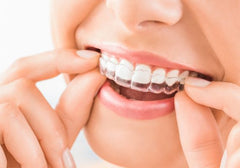
Caspersmile Clear Aligners correct misalignment, rebalance jaw movement, and help prevent long-term joint stress.

Recognizing symptoms of a dislocated jaw
Many people confuse jaw dislocation with muscle tension or mild TMJ discomfort. How to tell if your jaw is dislocated? The difference lies in intensity and function.
-
Common dislocated jaw symptoms include:
-
Sudden sharp pain near the ear or jaw joint
-
Inability to close the mouth fully
-
Jaw feels out of place on one side
-
Difficulty speaking, chewing, or swallowing
-
Drooling due to an open-jaw position
-
Swelling or tenderness around the face and neck
For those with recurring issues, symptoms may feel subtler:
-
Frequent popping or clicking
-
Mild but persistent jaw pain on one side
-
Jaw shifting during speech
-
Sensation of an unhinged jaw
Recognizing symptoms early can prevent long-term damage. But what should you do when it happens?
Medical and dental treatments for jaw dislocation
Treatment for a dislocated jaw depends on the severity of the displacement, the timing of professional intervention, and whether the condition is acute or recurrent. A structured treatment plan helps alleviate pain, restore proper jaw alignment, and lower the risk of future dislocations.
Here is how to fix a dislocated jaw, options used by medical and dental professionals:
Addressing bite alignment for long-term stability
Treatment success improves significantly when underlying bite and alignment issues are addressed. An uneven bite can place constant pressure on the jaw joint, increasing the risk of instability and recurrence. Alignment solutions such as Caspersmile Clear Aligner support healthier bite positioning, helping distribute jaw forces more evenly and promoting long-term jaw comfort alongside medical care.
How does it work?
Discover the fastest way to teeth straightening with Caspersmile.
Initial assessment
Begin your teeth straightening journey by taking a free smile assessment online. It will help determine whether you are eligible for Caspersmile Clear Aligners. Further, with the help of your assessment, our expert will suggest a treatment plan that best suits your dental issue.
Create your impressions
Once you are declared eligible for the treatment, an impression kit will be delivered to you as per the plan you buy. Create your dental impressions with the help of a user manual or book an online video session with our smile specialist for perfect impressions in the first go.
3D smile projection
Once we receive your dental impressions, a personalized treatment plan will be devised. Further, you will be provided with a 3D smile projection to have a glance at the results.
Aligner fabrication
Your aligners will be fabricated accordingly and will be delivered to your doorstep once you approve your 3D smile projection. Adhere to the wear time of aligners to achieve your desired results in just four to six months.
Manual reduction by professionals
Manual reduction is the first and most common treatment for an acute jaw dislocation. A trained dentist, oral surgeon, or emergency physician carefully guides the lower jaw back into its normal position within the temporomandibular joint. This is done using controlled hand movements that protect the surrounding muscles, ligaments, and cartilage.
To make the procedure safer and more comfortable, pain medication or muscle relaxants may be used to reduce spasms and resistance. Attempting this on your own is strongly discouraged, as improper force can worsen joint damage or cause fractures.
Immobilization and jaw support
Once the jaw is successfully repositioned, it needs time to heal. Immobilization helps prevent the joint from slipping out again while the surrounding tissues recover. Patients are usually advised to follow a soft or liquid diet and avoid wide mouth opening, chewing hard foods, or excessive talking for a short period.
In some cases, supportive bands, straps, or temporary splints may be used to limit jaw movement. These supports reduce strain on the TMJ and allow inflamed tissues to settle, lowering the risk of immediate recurrence.
Physical therapy and jaw exercises
When jaw dislocations happen repeatedly or instability persists, physical therapy becomes a key component of recovery. Under professional guidance, specific jaw exercises are introduced to strengthen supporting muscles, improve coordination, and restore controlled movement.
Therapy may also address posture, neck alignment, and daily habits that place stress on the jaw. Over time, these exercises help improve joint stability and significantly reduce the likelihood of future dislocations.
When surgery is needed
Surgery is considered only when conservative treatments fail or when jaw dislocations are frequent, severe, or caused by structural damage within the joint. Surgical procedures may involve tightening loose ligaments, reshaping parts of the joint, or stabilizing the TMJ to prevent repeated displacement.
This option is typically reserved for complex cases where quality of life is significantly affected and non-surgical methods no longer provide relief.
Prevention: Reduce the risk of jaw dislocation
Preventing jaw dislocation is possible with mindful habits.
-
Support your jaw during yawning
-
Avoid oversized or hard foods if you have a history
-
Use protective mouth guards during contact sports
-
Maintain good neck and head posture
-
Address clicking or discomfort early
-
Ensure orthodontic devices are properly adjusted

Did you know?
The TMJ is one of the most complex joints in the human body. It moves more than 2,000 times per day during talking, chewing, and swallowing.
Knowing prevention steps is helpful, but recognizing danger signs matters even more.
When to seek professional help?
Do not delay care if you experience:
-
Jaw locked open for hours
-
Severe swelling or bruising
-
Numbness or tingling
-
Recurrent dislocations from simple movements
-
Difficulty breathing or swallowing
A chronic jaw feels out of place sensation is not normal, and should never be ignored. Understanding recovery expectations can ease anxiety and help you plan.
What to expect: Recovery, aftercare, and long-term outlook
Short-term recovery includes rest, soft foods, and pain control. Most people improve within days with proper care.
Medium-term recovery typically includes guided jaw exercises and a gradual transition back to normal eating habits.
Long-term outcomes depend on addressing underlying causes. For those with alignment issues, Caspersmile Clear Aligner helps maintain balanced jaw function and reduces future strain.
Regular follow-ups and consistent care play a crucial role in maintaining long-term jaw health.
Final Takeaway: Protecting your jaw matters
A dislocated jaw is painful, frightening, and disruptive, but it is also manageable with the right knowledge and care. Early recognition, professional treatment, and preventive habits can prevent long-term damage.
Jaw instability is not something you should live with. Alignment, posture, and bite health all play a role in lasting comfort. With guidance, prevention, and solutions like Caspersmile Clear Aligners, you can protect not just your smile, but your daily quality of life.
Frequently asked questions


References
Liddell, A., & Perez, D. E. (2015). Temporomandibular joint dislocation. Oral and Maxillofacial Surgery Clinics of
North
America, 27(1), 125-136. https://doi.org/10.1016/j.coms.2014.09.009
Sharma, N. K., Singh, A. K., Pandey, A., Verma, V., & Singh, S. (2015). Temporomandibular joint dislocation.
National
Journal of Maxillofacial Surgery, 6(1), 16-20. https://doi.org/10.4103/0975-5950.168212
Papoutsis, G., Papoutsi, S., Klukowska-Rötzler, J., Schaller, B., & Exadaktylos, A. K. (2018). Temporomandibular
joint
dislocation: A retrospective study from a Swiss urban emergency department. Open Access Emergency Medicine,
10, 171-176.
https://doi.org/10.2147/OAEM.S174116
Tocaciu, S., McCullough, M. J., & Dimitroulis, G. (2019). Surgical management of recurrent dislocation of
the
temporomandibular joint: A new treatment protocol. British Journal of Oral and Maxillofacial Surgery, 56(10),
936-940.
https://doi.org/10.1016/j.bjoms.2018.10.274
Share This Article



Subscribe our newsletter
By clicking subscribe, you agree to our Privacy Policy and opt in to receive communications from Caspersmile. You can unsubscribe at any time.


